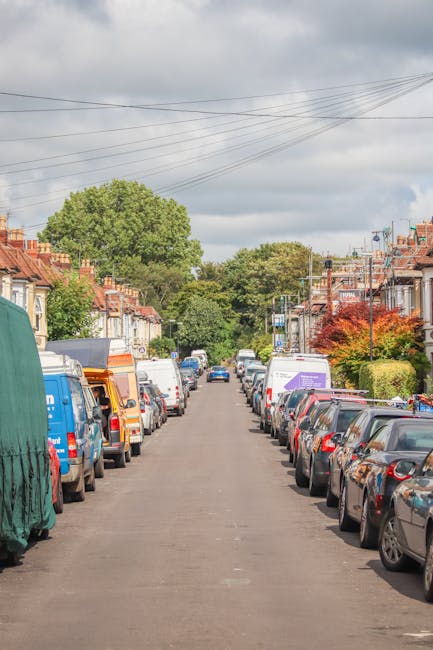
Blackheath Common removals guide for tight access properties
If you are planning a move near Blackheath Common and your property is awkward to reach, you already know the headache: narrow stairwells, shared entrances, awkward parking, low tree cover, and that one sofa that suddenly looks two sizes bigger on moving day. This Blackheath Common removals guide for tight access properties is here to make the whole thing feel manageable. It explains what matters, how to plan, where the real risks are, and how to keep the day calm enough that you can actually breathe a little.
Whether you are moving from a top-floor flat, a period terrace, a mews-style property, or a home with a tight driveway and limited turning space, the right preparation changes everything. A good plan can save time, reduce stress, and help prevent damage to walls, doors, furniture, and nerves. Let's face it, nobody wants the removal van blocking the street while everyone stands around guessing whether the wardrobe will fit.
This guide focuses on practical steps for tight access removals in the Blackheath Common area, with advice on planning, packing, access checks, and choosing the right moving approach for your property. If you want a broader overview of home moving support, you may also find the home moves service useful when comparing options.
Expert summary: Tight access moves are rarely difficult because of one big problem. They become difficult because of several small ones happening at once. Measure early, clear the route, confirm parking, protect the property, and choose a moving setup that fits the space rather than forcing a standard-size solution into a non-standard home.
Table of Contents
- Why tight access removals around Blackheath Common matter
- How the moving process works in tight access properties
- Key benefits and practical advantages
- Who this guide is for
- Step-by-step guidance for a smoother move
- Expert tips for better results
- Common mistakes to avoid
- Tools, resources and recommendations
- Law, compliance and best practice
- Options and comparison table
- Real-world example
- Practical checklist
- Conclusion
- Frequently asked questions
Why Blackheath Common removals guide for tight access properties Matters
Blackheath Common and the streets around it can be lovely to live in, but that beauty often comes with practical moving complications. Older buildings, compact road layouts, limited loading space, and entrance areas that were never designed for modern bulky furniture can make a simple house move feel a bit more technical than expected.
Tight access matters because removal work is not just about carrying boxes from one place to another. It is about moving safely through a space without blocking neighbours, damaging fixtures, or creating delays. In a property with awkward access, the real challenge is not always distance. It is clearance. Can the van park close enough? Can the bed frame turn on the landing? Can two people carry a washing machine down a staircase without scraping paintwork? Those questions decide how smoothly the day goes.
People often underestimate how quickly small access issues compound. A doorway that is just a touch narrow, a stair corner with no landing space, or a slope outside the property can each add time. Put them together and the move can become frustrating fast. That is why planning for tight access early is so useful. It turns unknowns into a list of tasks you can actually control.
There is also a trust element. If you are hiring a removal company or looking at removals near me, you want reassurance that the team understands awkward properties rather than treating every job as the same. That practical experience matters more than polished sales language. To be fair, the move itself will tell you very quickly whether the preparation was good or not.
How Blackheath Common removals guide for tight access properties Works
A tight access move works best when the process is broken into clear stages: assess, plan, protect, move, and check. That sounds simple, but each stage does real work behind the scenes.
1. Assess the access properly
Start with the route from inside the property to the vehicle. Measure door widths, hallways, stair turns, lifts, and any external paths. Check for low ceilings, railings, uneven paving, and gates that swing inward. If a piece of furniture is large or awkwardly shaped, measure it in advance too. A tape measure is boring, yes, but it is the hero of the day.
2. Plan the vehicle position
In tight access situations, the parking plan matters almost as much as the packing plan. You may need a smaller vehicle, a shorter loading distance, or a setup that avoids blocking a narrow road. The point is to reduce carrying distance and keep the route safe. If the van cannot park close enough, every item becomes harder to manage.
3. Choose the right carrying method
Not every move needs a huge truck. Sometimes a smaller man with van setup is the smarter choice for a property with limited access because it can be easier to position, easier to load, and less likely to create problems on the road. In other cases, a larger van is still fine if the access route is straightforward and the loading area works.
4. Protect the property and the furniture
Corner protectors, furniture blankets, straps, and mattress covers all help reduce damage. Tight access usually means more turning, more lifting, and more opportunities for a knock or scrape. If there is a narrow stairwell or a painted bannister, protection is not optional; it is just common sense.
5. Move in a controlled sequence
The best approach is usually the simplest one: remove the largest and most awkward items first if the route is clear, then work through the medium items, then the boxes. That keeps congestion down. It also helps if one person stays at the doorway or landing to guide movement. You do not want three people trying to reverse engineer a sofa angle in real time.
6. Final check before leaving
Once the last item is out, do a slow walk-through. Check cupboards, loft access, behind doors, and any storage areas. In a tight access property, people often focus so hard on the tricky item that they forget a smaller one still sitting in a hallway cupboard. Happens all the time.
Key Benefits and Practical Advantages
Preparing for tight access removals properly brings benefits that are easy to feel on moving day.
- Less damage risk: A measured route and protected corners reduce scuffs and dents.
- Faster loading: Fewer awkward surprises means the crew can keep a steady rhythm.
- Lower stress: When everyone knows what fits where, the day feels less chaotic.
- Better vehicle choice: The right van or truck avoids wasted time and awkward parking manoeuvres.
- Cleaner handover: Good organisation makes it easier to leave the property in better shape.
There is also a financial upside, though it is not always obvious at first glance. A well-planned move can help avoid extra time on site, repeat trips, or unexpected handling complications. You may still need specialist help, but you are less likely to pay for disorganisation. That is a fair trade.
For people moving out of older flats or compact houses, tight access planning can also reduce neighbour friction. Nobody wants to be "that move" on the street, with a van half on the kerb and a mattress wobbling through the front gate. A tidy, controlled move tends to feel better for everyone nearby.
Who This Is For and When It Makes Sense
This guide is for anyone moving from or into a property where normal access is limited. That can mean different things in different homes.
- Top-floor flats with narrow staircases
- Period properties with compact entrances
- Homes on roads with limited parking
- Properties with steep steps or sloped driveways
- Buildings with shared hallways or tight internal bends
- Moves where furniture is unusually large or awkward
It also makes sense for landlords, estate agents, and office managers handling small premises with restricted loading space. Even light commercial work can run into the same issues, especially if filing cabinets, desks, or archive storage are involved. For those situations, a broader commercial moves page may be relevant when assessing the right approach.
If you are unsure whether your move counts as "tight access," a good rule is simple: if you are already worrying about a sofa turning corner, it probably does. That is not a problem. It just means the planning needs to be a bit sharper.
Step-by-Step Guidance
Here is the practical version. No fluff.
- Walk the full route. Start at the front door and follow the exact path to the vehicle. Note every turn, step, slope, and obstacle.
- Measure key items. Record the dimensions of large furniture and compare them with entrances, landings, and stair turns.
- Check parking and stopping space. Decide where the vehicle can load safely and how close it can get.
- Separate awkward items early. Beds, wardrobes, tables, mirrors, and white goods should be planned first.
- Disassemble where sensible. Flat-pack furniture and modular pieces are often easier to move in sections.
- Pack by loading order. Keep the items needed first at the end of the load, not buried under everything else.
- Protect routes and edges. Use coverings on sharp corners, bannisters, and door frames.
- Label boxes clearly. Especially in smaller homes, clear labels reduce the chance of clutter blocking access.
- Confirm timing. Avoid peak traffic windows where possible, especially if the road is narrow or busy.
- Do a final sweep. Check every room, cupboard, and storage area before the vehicle leaves.
If you are arranging your own packing, consider whether professional help would save more time than it costs. Services like packing and unpacking services can be especially useful where access is tight, because good packing reduces handling problems later.
One small but important point: keep the hallway and exit clear right from the start. It is tempting to stage "just one more" box in the passage, but narrow routes get cluttered quickly. And then suddenly everyone is stepping over a lamp base and pretending that is normal. It is not.
Expert Tips for Better Results
These are the sort of details that often make a move feel easier without anyone really noticing why.
Tip 1: Treat the route like a project, not just a path
When access is tight, every metre matters. Tape down a simple mental map of the route: bedroom to landing, landing to stairwell, stairwell to front path, front path to van. If there is a choke point, that is where you need the most care.
Tip 2: Leave more time than you think you need
Most people estimate based on normal lifting, not difficult lifting. Add time for turning, pausing, checking clearances, and moving slowly through awkward angles. That buffer does wonders for stress levels.
Tip 3: Use the right number of helpers
Too few people creates strain. Too many can create confusion. For tight access properties, coordination matters. Two focused movers can often outperform four people who are all talking at once. Slightly awkward to say, but true.
Tip 4: Photograph access issues in advance
If you are discussing the job with a mover or comparing options through movers or removal services, images can be useful. A photo of the stairwell, entrance, and parking position gives a clearer picture than a vague description like "it's a bit tight."
Tip 5: Think about the weather
Rain, wind, and icy patches make tight access harder. A wet step or slippery path changes the whole pace of the move. In the UK, that's just life really. A dry towel by the door and extra floor protection can prevent a lot of small annoyances.
Tip 6: Don't overpack boxes
Heavy boxes are awkward enough in open spaces. In narrow hallways or stairwells they become much worse. Keep them manageable. Your back will thank you later, probably without saying much about it.
Common Mistakes to Avoid
Tight access moves usually go wrong in fairly predictable ways. Avoiding these mistakes makes a surprisingly big difference.
- Assuming "it'll be fine." That phrase has caused more moving-day stress than almost anything else.
- Ignoring measurements. A guess is not a plan, especially for sofas, beds, or appliances.
- Blocking exits with boxes. This slows everything down and increases the risk of trips and knocks.
- Forgetting parking restrictions. A van that cannot stop legally or safely creates a chain reaction of delays.
- Leaving disassembly too late. Doing it on the stair landing is rarely a good idea.
- Not protecting walls and door frames. Small scuffs are easy to avoid and annoying to repair.
- Trying to force oversized items through tight turns. Sometimes the right answer is to rotate, remove legs, or split the item. Forcing it is how people end up with chipped paint and bad moods.
Another common issue is under-communicating. If you know there is a narrow path, say so. If a resident needs access to a shared entrance, mention it. If the front gate sticks, mention that too. It saves time and avoids that awkward moment when everyone discovers the problem together.
Tools, Resources and Recommendations
You do not need a warehouse full of equipment, but a few practical items make tight access removals much easier.
| Tool or item | Why it helps | Best use case |
|---|---|---|
| Measuring tape | Confirms furniture and doorway clearances | Any move with narrow entrances or stair turns |
| Furniture blankets | Protects surfaces from scratches and knocks | Wooden furniture, bannisters, wall edges |
| Removal straps | Improves control when carrying bulky items | Mattresses, wardrobes, appliances |
| Floor protection | Helps keep routes clean and safe | Wet weather, delicate flooring, shared entrances |
| Labels and markers | Makes loading and unpacking more orderly | Small homes where space gets crowded fast |
| Tool kit | Supports quick disassembly and reassembly | Beds, shelving, flat-pack furniture |
If you want a more structured move, it can help to use a team experienced with smaller vehicles and careful handling, such as a man and van or a dedicated moving van option. For some moves, especially when access is awkward but the load is modest, that is the sweet spot.
For people who need reassurance around service standards, pages such as insurance and safety, health and safety policy, and recycling and sustainability can be helpful when reviewing how a company works and what it values. And if pricing is on your mind, the pricing and quotes page is the sensible place to start.
Law, Compliance, Standards, or Best Practice
For a home move, the main compliance concerns are usually safety, access, property protection, and responsible handling. You do not need to become a legal expert, thankfully, but a few UK best-practice points are worth keeping in mind.
Vehicle parking and loading should be handled lawfully and without creating unnecessary obstruction. If a street is narrow, or if the access point is shared, planning the timing and vehicle position matters. For flats and managed properties, building rules may also apply to lift use, booking loading bays, or using service entrances. Check these early rather than on the morning, because once the van is there, everyone feels the clock ticking.
From a safety point of view, the moving team should be working in a way that reduces manual handling risk. That means sensible loads, good communication, clear walkways, and proper lifting techniques. For awkward properties, these basics matter even more. They are not just policy words; they are the difference between a controlled move and a messy one.
If you are comparing providers, it is reasonable to ask how they handle damage prevention, what their process is for tight access, and whether they can explain the moving plan clearly. That kind of transparency is usually a good sign. You do not need grand promises. You need confidence that the team has thought it through.
Options, Methods, or Comparison Table
Different access situations call for different moving methods. There is no one-size-fits-all answer, which is probably annoying but true.
| Option | Best for | Strengths | Limitations |
|---|---|---|---|
| Man and van | Smaller household loads, compact streets | Flexible, easier to park, usually quicker for short routes | May not suit very large moves or multiple bulky items |
| Standard removals team | Full house moves with mixed items | More carrying support, better for complex loads | Can be harder to position in very tight streets |
| Smaller moving van | Restricted access with moderate load size | Access-friendly, practical, often easier to manage | May require more careful load planning |
| Full removals vehicle | Moves with easier road access and larger volume | Good capacity, fewer journeys | Not always ideal for narrow roads or limited parking |
The best choice depends on your property, your furniture, and your timetable. A smaller vehicle can be a better operational fit even if it means thinking a bit more carefully about load order. On the other hand, if the access is tricky but the volume is high, a larger, coordinated removals setup may still be the right call.
That is why it helps to compare services like house removals, house movers, and man with van removal style solutions before deciding. The right option is not always the biggest one.
Case Study or Real-World Example
Picture a typical Blackheath Common flat move on a cool morning. The property has a narrow front path, a short but sharp stairwell turn, and a landing that barely gives enough room to swing a medium wardrobe. The van can stop nearby, but not directly outside the door because of the road layout and passing traffic.
In a move like this, the team's first win is not lifting. It is planning. The wardrobe is measured, the legs are removed, and the route is cleared before any other items leave the room. Soft items go out first only if they help create space, while the heavier pieces are staged for controlled carrying. The hallway stays open. One person checks the stair corner before every large item comes through. Nothing dramatic. Just steady work.
The move is still physical, of course. You hear the scrape of protective blankets, the quiet count before a lift, the occasional "careful there" at the top of the stairs. But because the route was mapped and the access understood, the whole thing feels calm enough. A bit busy, yes. But not chaotic. And that is usually the difference between a move people remember fondly and one they want to forget by lunchtime.
This is exactly why tight access planning is worthwhile. It does not remove effort, but it removes unnecessary effort. That is a subtle distinction, but a very important one.
Practical Checklist
Use this checklist before moving day. It is simple, but simple is good.
- Measure doors, hallways, stair turns, and large furniture
- Check whether any furniture needs dismantling
- Confirm parking and loading access in advance
- Clear the route from the property to the vehicle
- Protect floors, corners, bannisters, and door frames
- Label boxes clearly and keep essentials separate
- Tell the mover about low ceilings, shared entrances, or awkward bends
- Arrange enough helpers for bulky items
- Prepare tools for disassembly and reassembly
- Do a final walk-through before departure
If the move includes items that are hard to handle or place, it may also be worth reviewing furniture pick up options for single items or awkward collections. Not every job needs the same setup, and that flexibility can save a lot of effort.
Conclusion
Tight access removals in Blackheath Common do not have to feel overwhelming. Once you break the job into access, parking, route protection, item sizing, and load order, the process becomes much more manageable. The main thing is to prepare for the property you actually have, not the one you wish you had.
Good planning protects your furniture, your walls, your time, and your sanity. And honestly, that is enough reason to spend an extra hour on measurements and route checks. A move can still be busy, even noisy, even a little sweaty in the moment. But it should not be a disaster.
If you are still comparing moving support, exploring the right combination of removals, removal van capacity, and handling support is a sensible next step. Clear information now makes the move easier later, and that is usually worth the effort.
Get a free quote today and see how much you can save.
And if today's the day you start planning properly, that is a very good start already.
Frequently Asked Questions
What makes a property a tight access move?
A property is usually considered tight access when the route from the home to the vehicle is limited by narrow staircases, small doorways, awkward turns, restricted parking, steep steps, or shared entrances. If large furniture needs turning or disassembly to fit, it is almost certainly a tight access move.
How do I know if my sofa will fit out of the property?
Measure the sofa first, then measure the doorway, hallway, and any stair turns it needs to pass through. Remember to account for angles, not just straight widths. Sometimes a sofa will fit on paper but not in practice because of the turning space.
Should I choose a smaller van for a tight access property?
Often, yes. A smaller van can be easier to park, easier to position, and less disruptive in narrow streets. That said, the right vehicle depends on how much you are moving and how much carrying distance there is. Bigger is not always better here.
Do I need to dismantle furniture before the move?
Not always, but it helps with awkward items such as beds, wardrobes, and some tables. Dismantling can reduce damage risk and make tight corners easier to handle. If you are unsure, prepare the tools anyway and make the decision after measuring.
How far in advance should I plan a Blackheath Common move with limited access?
As early as possible. Even a simple move benefits from advance planning, but a tight access property should be reviewed several days or weeks ahead if you can manage it. The earlier you check measurements and parking, the fewer surprises you face.
What should I tell the removal team before moving day?
Tell them about narrow doorways, stairs, parking restrictions, steep paths, shared entrances, lift access, and any items that are unusually heavy or fragile. The more accurate the information, the better the plan. A quick photo can help too.
Can a man and van service handle tight access removals?
Yes, often it can. A man and van service is often a strong option for smaller loads, short distances, and compact streets. It is especially useful where manoeuvrability matters more than sheer vehicle size.
What are the most common damage risks in tight access moves?
The main risks are scuffed walls, chipped bannisters, dented furniture corners, scratched floors, and strained lifting. These usually happen when the route is cramped or the item is larger than expected. Good protection and careful route planning help a lot.
Is it better to move during quiet traffic hours?
Usually, yes. Quieter times can make parking easier and reduce the pressure of passing traffic. In narrow Blackheath Common streets, that calmer window can make the whole move feel more controlled. It is not always possible, but it is worth considering.
What if I have a very awkward item that will not fit normally?
Start by checking whether it can be dismantled, rotated, or carried through an alternative route. If not, ask whether a specialist approach is needed. For some single-item jobs, furniture pick up support may be more practical than a full-house setup.
How do I keep the hallway clear during the move?
Stage boxes in one room rather than spreading them across the home, and keep the exit path open from the start. Assign one place for packed items and another for tools and wrap. It sounds basic, but it makes a huge difference once carrying begins.
What is the best next step if I am still unsure about my access?
Take measurements, note the access challenges, and compare your needs with the options available. If you want a more general starting point, the removals and pricing and quotes pages are useful places to begin. A bit of planning now saves a lot of stress later, and that is no bad thing.